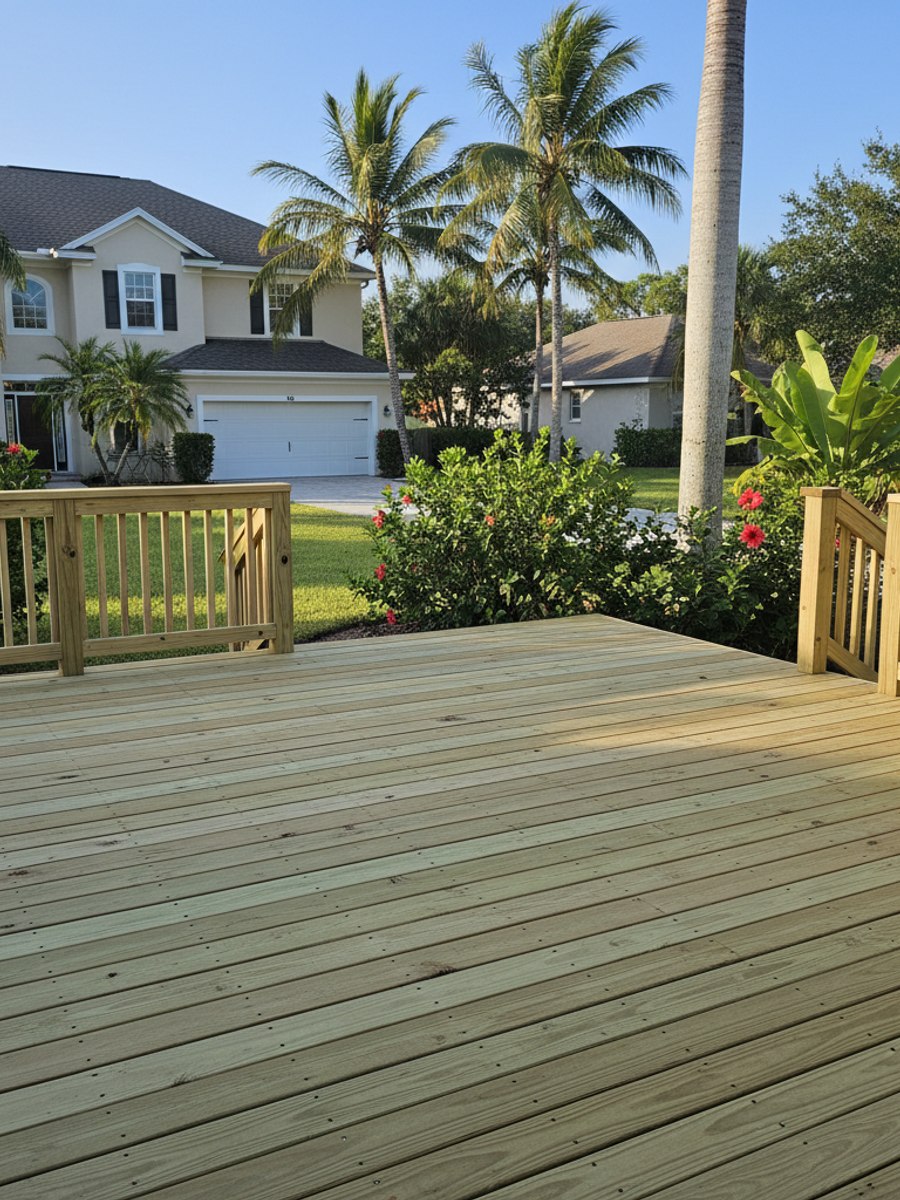
Hiring someone to build or fix a deck is different from hiring a painter. A bad paint job peels. A bad deck can drop someone into the yard. In a city like Hollywood, where the soil is sandy, the water table sits close to the surface, and the air off the Intracoastal eats cheap hardware alive, the margin for cutting corners is smaller than it looks. Here's what actually separates a builder worth hiring from one you should let walk out the door.
Why local ground and weather change the job
Most lots in Hollywood are sand and shell fill, not clay. Sand drains fast, which is good, but it also compacts unevenly under a footing if it wasn't tamped and poured right the first time. Get within a mile or two of the coast, or south toward the Intracoastal neighborhoods, and the water table can sit only a few feet down. That affects how deep a footing needs to go and whether a post base sits in standing water after a storm.
Then there's the weather itself. Hollywood runs a wet season from June through October, the same stretch that covers hurricane season, with afternoon downpours that can dump an inch of rain in twenty minutes. Framing lumber left uncovered on site for a week in July humidity starts absorbing moisture before it's even installed. And salt air corrodes standard zinc-coated screws in a few years near the water. Any deck built here should use stainless steel or hot-dip galvanized fasteners, not the cheap coated screws sold in a box at the hardware store. If a builder doesn't bring this up unprompted, ask.
Permits are not paperwork, they're a filter
A deck attached to the house, or built more than a couple feet off the ground, almost always needs a permit through the City of Hollywood or Broward County, depending on where the property sits. Broward is part of Florida's High Velocity Hurricane Zone, which means wind load and attachment rules here are stricter than in most of the rest of the state. That translates into real inspection steps: a footing inspection before concrete gets poured, a framing inspection before the decking boards go down, and a final inspection before it's signed off. A contractor who tells you a permit isn't needed for an attached deck is either wrong or hoping you won't ask questions later. Some of the newer developments west of I-95 and out toward Pembroke Pines also carry HOA design rules on top of the city permit, so check that separately if you're in one of those communities.
What a real quote actually spells out
A vague quote is the first sign of a vague job. A real one should tell you the footing size and depth, the post dimensions, joist spacing (16 inches on center is standard, some composite manufacturers require 12 inches to keep their warranty valid), and how the deck ties into the house. That last part matters more than people think. The ledger board, the piece bolted to the house that the whole structure hangs from, needs to be through-bolted, not just screwed in, and flashed properly so water doesn't get behind it and rot the house's rim joist. On older homes in neighborhoods like Hollywood Lakes or Hillcrest, built in the 1940s through 60s, that ledger sometimes has to attach to fascia or an addition wall that isn't built the same way a 1990s stud wall is, and that takes more thought than a standard lag-and-go.
Ask what lumber grade is going into the frame if it's pressure-treated pine, and what brand of composite if it's composite. Composite doesn't rot, but the framing underneath it usually still is treated pine, and that wood needs the same attention to moisture and fasteners as an all-wood deck. Ask about railing height too. Code calls for 36 inches on most residential decks, with baluster gaps no wider than 4 inches, and it's an easy detail for a sloppy builder to guess at instead of measure.
Timelines worth knowing
Concrete footings need roughly 24 to 48 hours before framing can bear weight on them, and closer to 28 days for a full cure, though nobody waits that long to keep building on top of them. If a crew tells you they're pouring footings and framing the same day, that's a corner being cut. On the finishing side, if the deck is being stained rather than left as composite, the wood needs to dry out for a few weeks after installation before a sealer will actually soak in instead of sitting on wet fibers. A builder in a rush to collect final payment sometimes skips that wait.
What to walk away from
- No permit, or a builder who says the job is small enough to skip one when it's clearly attached to the house.
- A quote with no lumber species, no fastener spec, and no footing depth listed anywhere.
- Cash-only pricing with no address on the paperwork.
- Standard interior screws or unmarked hardware instead of stainless or hot-dip galvanized, especially anywhere near the water.
- No mention of how the ledger attaches or how it's flashed. This is the single most common failure point on decks that come loose or rot from the inside.
None of this is complicated to ask about. A builder who's actually done the work will answer in specifics without being annoyed you asked. One who gets vague or defensive is telling you something.
We handle installation, repair, framing, and resurfacing work across Hollywood and the towns around it, and we're happy to walk through footing depth, fastener choice, and permit steps before you sign anything. You can see more about our deck builder work and how we approach a job before it starts.